As we celebrate Black History Month, we pause to honor the Black artists, visionaries, and leaders whose creativity, advocacy, and stewardship have shaped — and continue to shape — the landscape and experience of The Rose Kennedy Greenway.
Public parks are more than physical spaces. They are places where history, identity, and imagination meet. From early land ownership to community activism, public art, and living landscapes, these individuals remind us that Black history is not separate from this place — it is embedded within it.
This month, we recognize six individuals whose work and legacy continue to influence how The Greenway is experienced, understood, and shared.
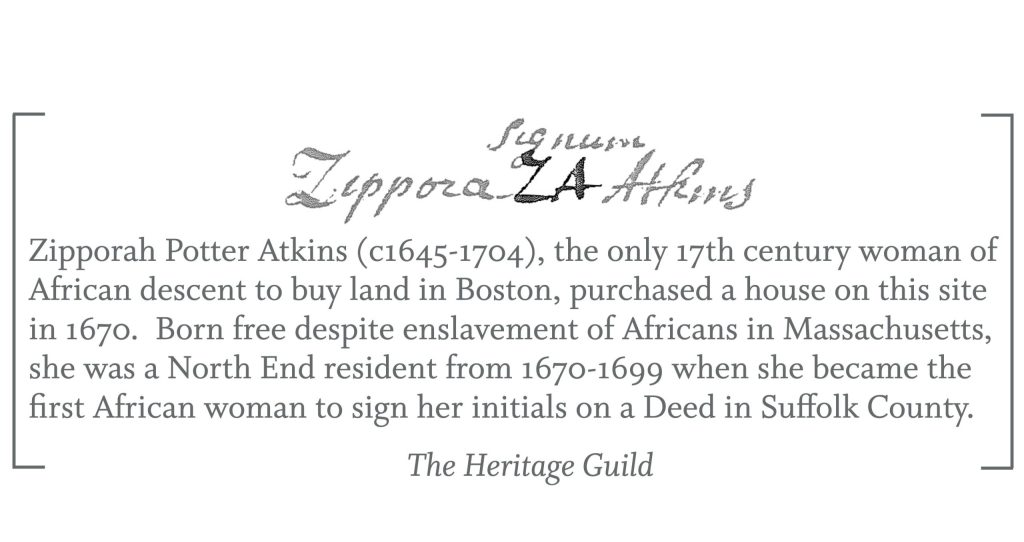
Zipporah Potter Atkins
(c. 1645–1705)
Boston Land Owner
Zipporah Potter Atkins holds a singular place in Boston’s early history. In the 1600s, she became the first Black woman — and one of the first women overall — to own land in the city, asserting presence and agency at a time when both were rare and hard-won.
Her ownership represents an early claim to belonging — a reminder that Black history in Boston begins not at the margins, but at its foundations. As the land has changed over centuries, her story endures as a testament to resilience and rootedness.
Visitors are encouraged to explore the memorial to Zipporah Potter Atkins on The Greenway in the North End, which includes her signature and serves as a lasting acknowledgment of her life and enduring connection to this place.
The site of Potter Atkins’ home was also memorialized on The Greenway in 2024 through LaRissa Roger’s public art commission, Going to Ground.
Rob “ProBlak” Gibbs
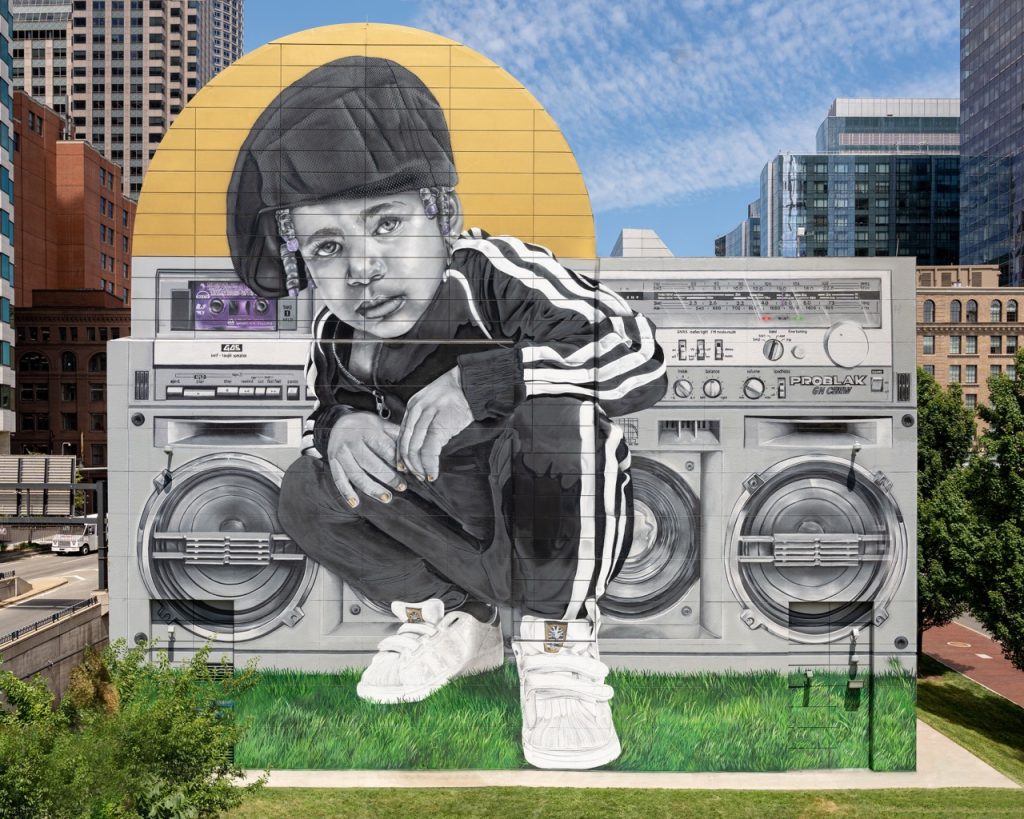
Muralist | Creator of Breathe Life Together, 2022
Roxbury native Rob Gibbs (he/him) is a Boston-based muralist, father, and long-time mentor to young people. His work centers the lived experiences of Black and Brown communities, grounded in the belief that public spaces should reflect the people who inhabit them.
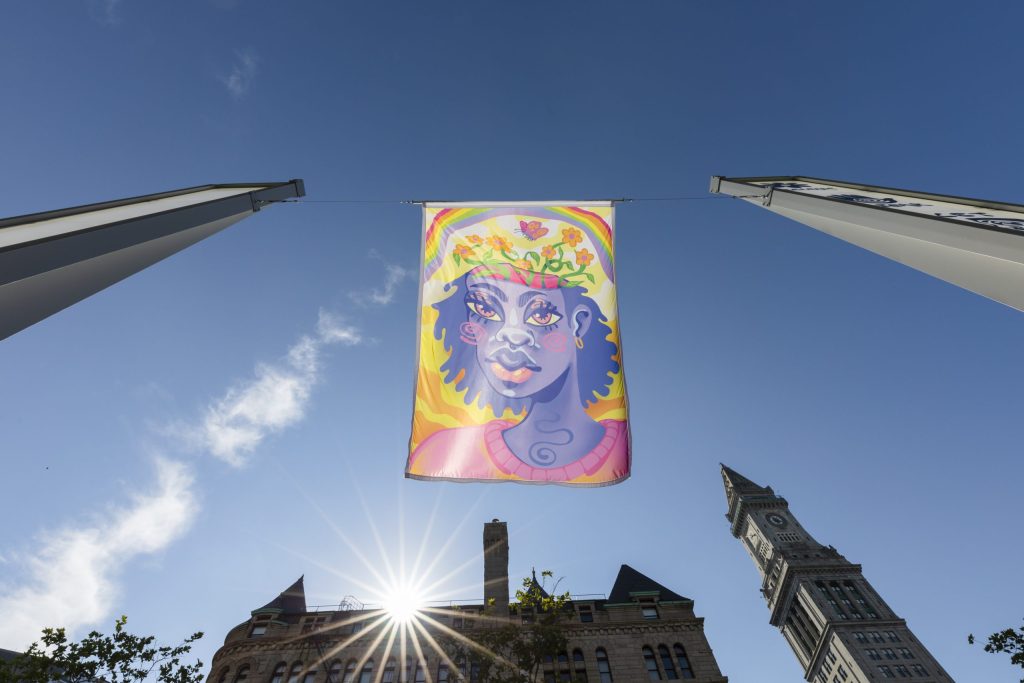
His mural Breathe Life Together, on display on The Greenway from 2022 to 2024, depicted a young Black girl emerging naturally from the landscape—confident, grounded, and fully at home. Oriented toward the surrounding neighborhoods, the figure was surrounded by visual references to culture, memory, and generational knowledge.
Through its presence in the park, the mural created space for recognition and visibility. It invited visitors to consider whose stories are represented in shared spaces, and how seeing oneself reflected can shape a sense of belonging.
Ja’Hari Ortega
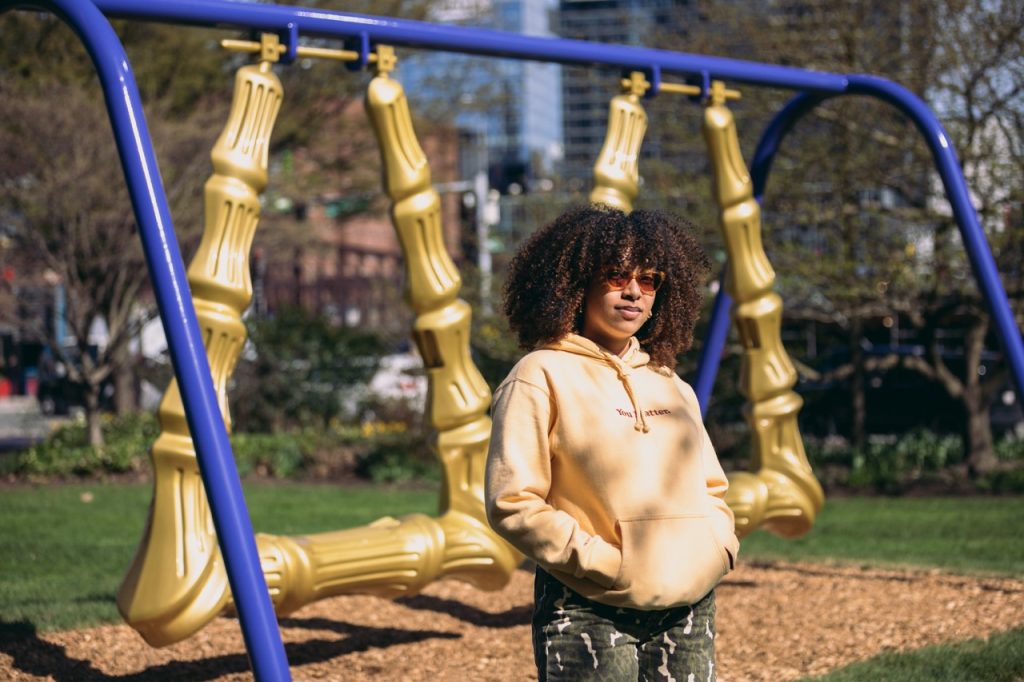
Artist | Creator of Big Hoops to Fill, 2025
Boston-based artist, sculptor, and jewelry maker Ja’Hari Ortega (she/her) creates work that draws from personal history to explore culture, identity, and connection. Her practice highlights the power of everyday objects to carry meaning across generations.
Her large-scale sculpture Big Hoops to Fill transformed bamboo hoop earrings — an iconic form of jewelry worn by many women of color — into an interactive public artwork. Suspended from a swing set inspired by the one Ortega grew up playing on in Roxbury, the sculpture invited movement, rest, and play.
By elevating a familiar cultural symbol in downtown Boston, the work centered experiences often absent from public monuments. The installation offered moments of joy and reflection, affirming that belonging can be felt not only through recognition but through participation.
Mithsuca Berry
Artist | Advocate for Rest and Belonging, Where The Land And Our Bodies Intersect, 2022
Mithsuca Berry (they/them) is an artist whose work centers the rights of Black people and people of color to occupy, rest, and exist freely in public spaces. Their installation on The Greenway in 2022 responded to the legacies of “loitering laws” that historically restricted the presence of Black communities in Boston’s streets and parks.
Through their work Where The Land And Our Bodies Intersect, Berry invited visitors to pause, rest, and recharge — creating a space where Black and Brown individuals could see themselves reflected in the park’s design and feel a sense of welcome. The work emphasized that public spaces are not only for transit or spectacle, but for care, reflection, and community connection.
Berry’s work resonates with the broader mission of The Greenway: to be a place where everyone can find belonging, visibility, and the freedom to inhabit the park fully and joyfully.
Michael Gibson
Topiary Artist
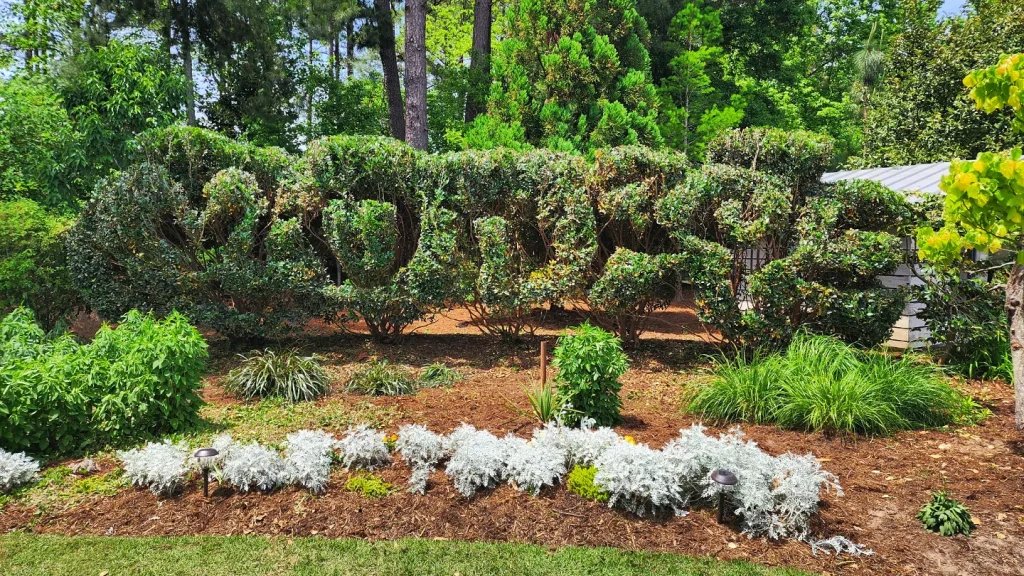
World-renowned, self-taught topiarist Michael P. Gibson brings together horticulture, geometry, and storytelling through his signature Gibson Method—an “illusion topiary” approach that transforms plants into living sculptures shaped by patience, care, and imagination. With more than 30 years of experience and over 700 living works created nationwide, Gibson’s practice reminds us that art can be grown as well as built, evolving over time through an ongoing relationship between people and the natural environment. His sculptures introduce moments of surprise and delight, inviting curiosity while encouraging a slower, more attentive way of experiencing the park.
We are excited to welcome Michael to The Greenway this spring for a special topiary pruning collaboration, offering visitors a rare opportunity to witness how care, craft, and creativity come together in living landscapes—and how thoughtfully shaped nature can deepen our connection to place.
Mel King
(1928–2023)
Boston Activist, Educator, and Community Leader
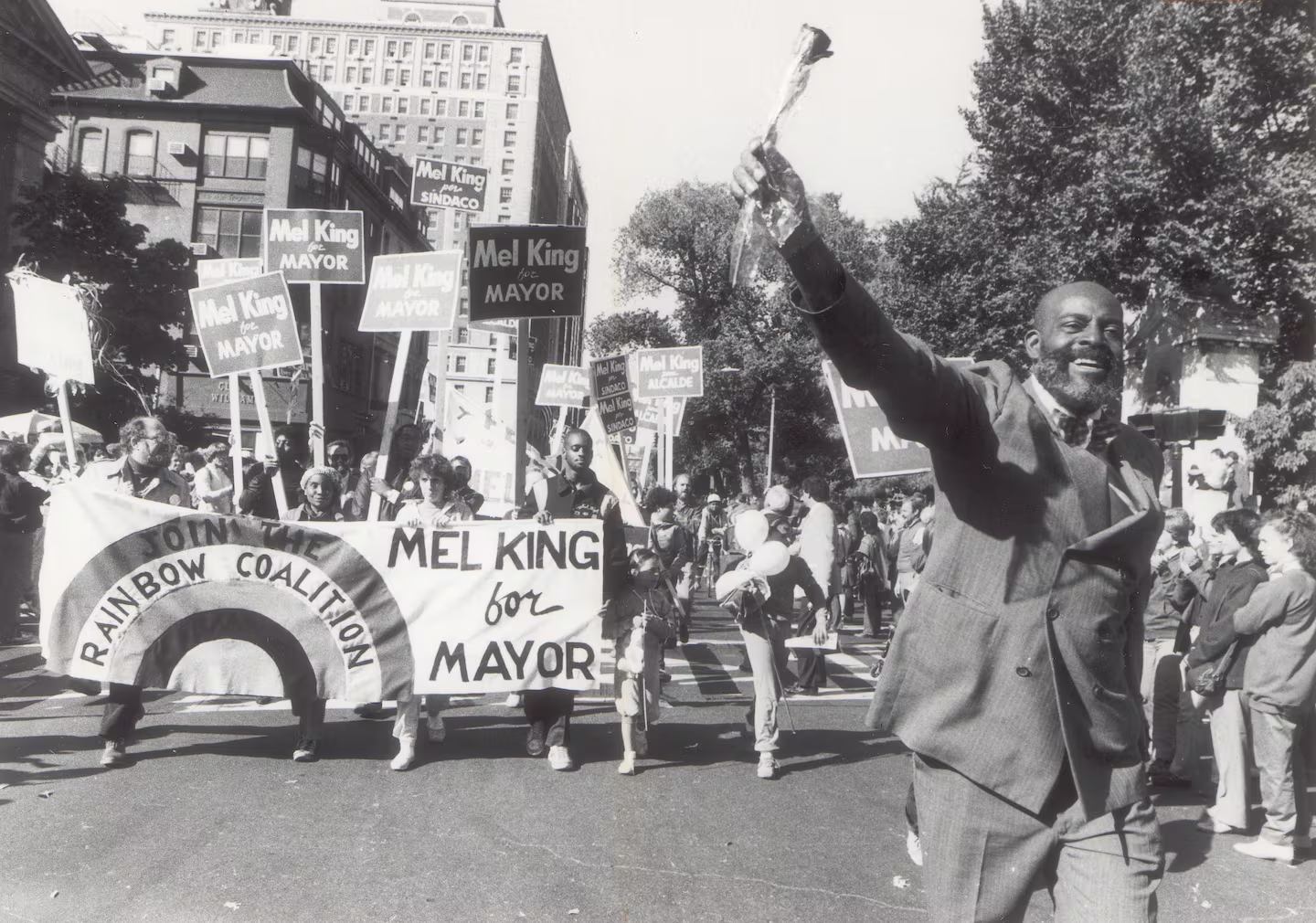
Mel King was a lifelong advocate for social justice, community voice, and equitable urban planning in Boston. His organizing and leadership helped shape public conversations around highway construction and the long-term impacts of infrastructure on neighborhoods.
King championed the belief that communities divided by highways deserved reconnection, investment, and dignity. His work helped lay the groundwork for the removal of the Central Artery and the reimagining of land once used to separate neighborhoods.
The Greenway stands as part of that legacy — a space made possible through persistence, vision, and the conviction that cities should foster connection rather than division.
Looking Forward
As we honor Black History Month, we recognize that history is not only something we remember — it is something we continue to shape together.
Through land ownership, advocacy, public art, and creative expression, these individuals have helped define The Greenway as a place of visibility, connection, and belonging. We are grateful for their contributions and remain committed to uplifting Black voices and stories within our park — this month and throughout the year.