On view February 2026 – June 2026
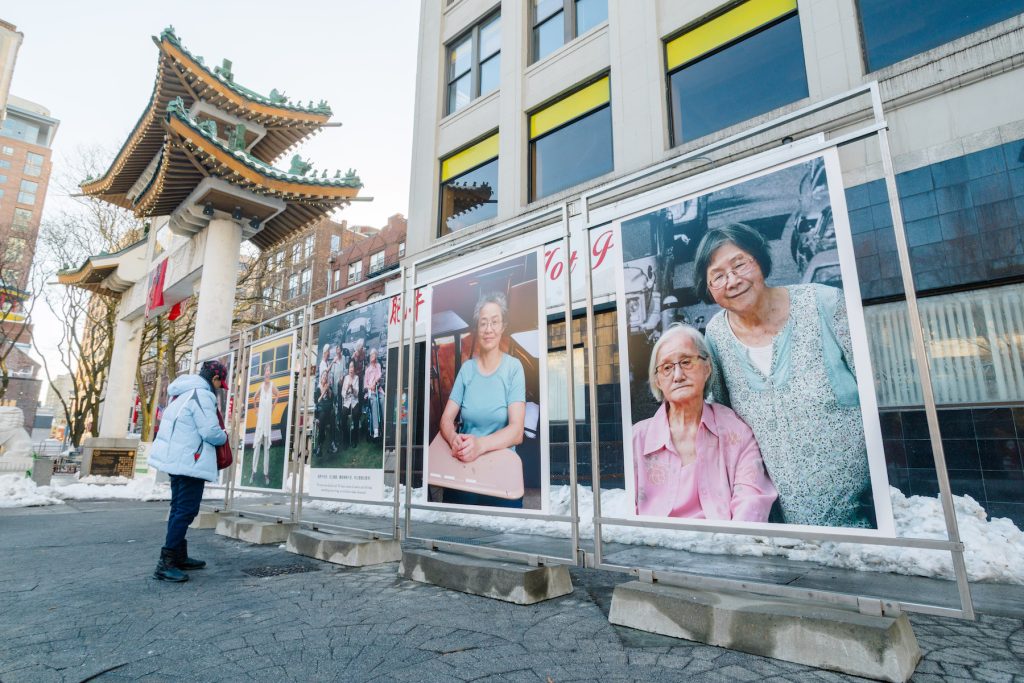
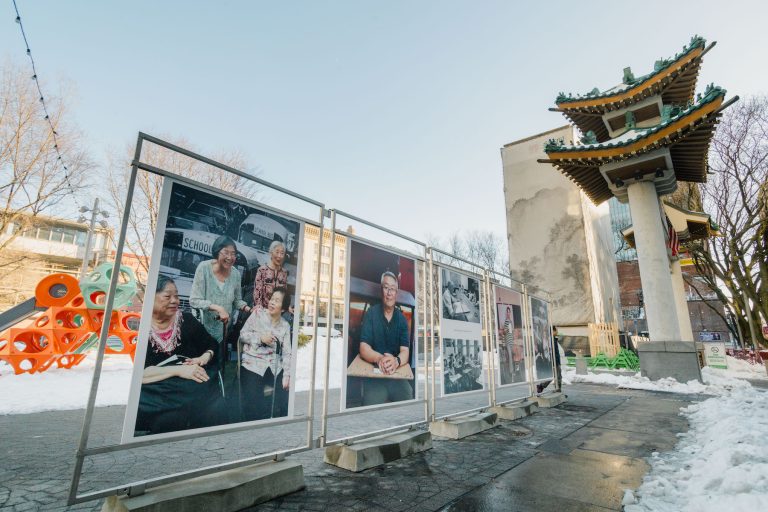
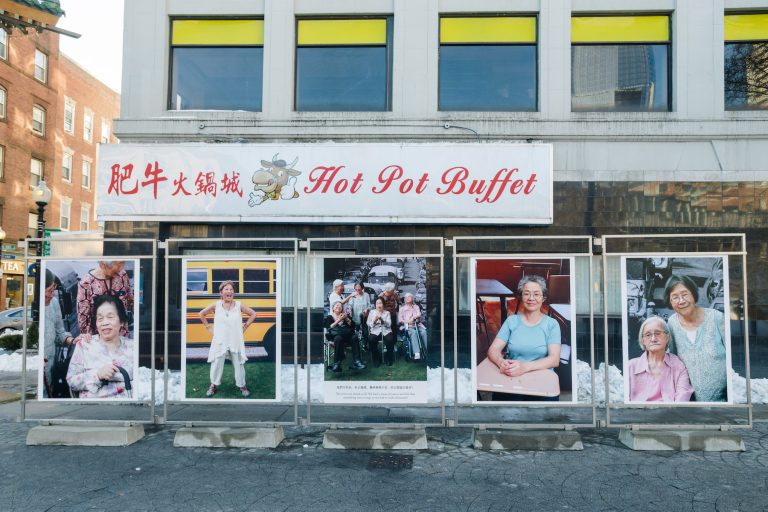
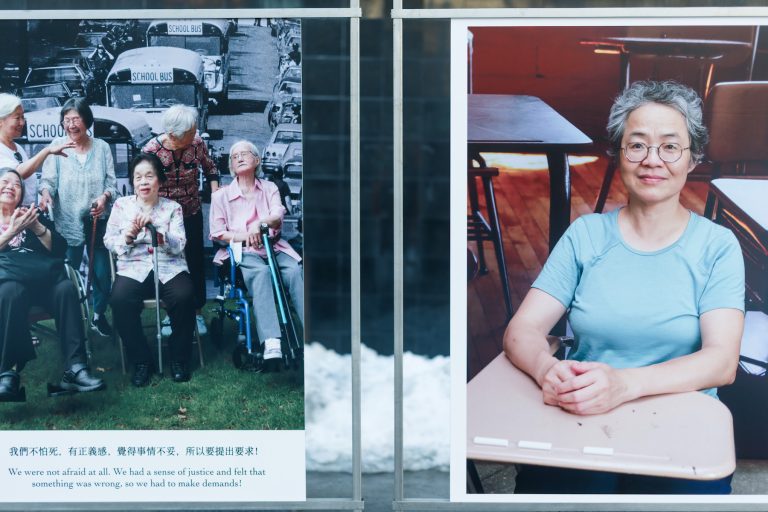
Boston Busing in Chinatown, 1975 is a photo exhibition highlighting the mothers, students, and teachers who organized for educational equity during Boston’s court-ordered school desegregation. In 1975, when Boston Public Schools began busing elementary students to other neighborhoods, Chinese immigrant families faced a critical challenge: while desegregation aimed to provide equal access to quality education, the district had not addressed concerns about safety, communication barriers, and representation for Chinese children being bused into predominantly white neighborhoods.
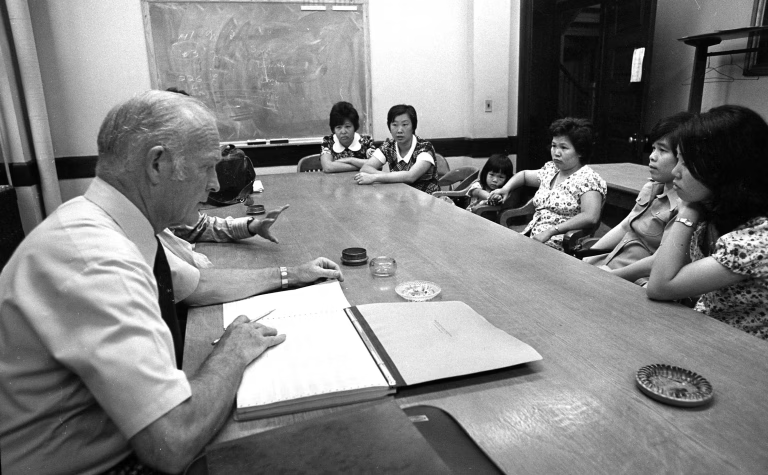
In response, Chinese immigrant mothers organized to demand safety and educational rights for their children, culminating in a highly successful school boycott that brought the Boston School Committee to the negotiating table. Their victory was an early example of working-class immigrant women wielding collective power within Chinatown and at the city level—a story that has been largely absent from mainstream narratives about Boston’s busing crisis.
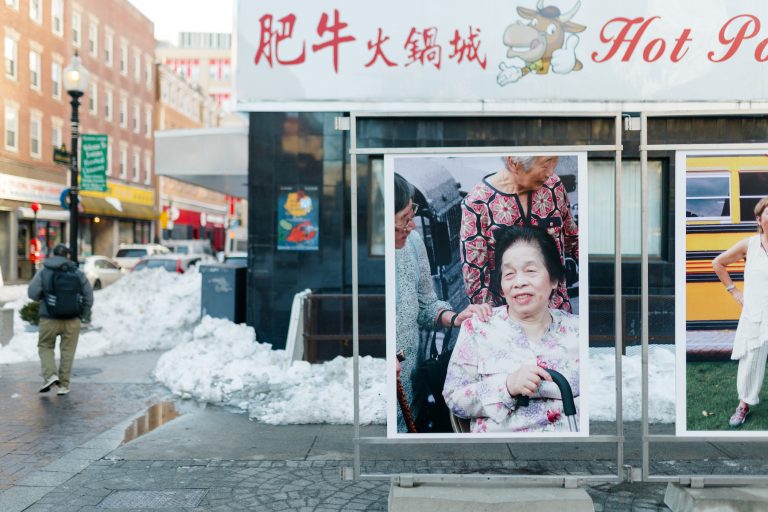
In July 2025, the Immigrant History Trail team gathered former teachers, parents, and students involved in this historic moment for a reunion picnic at Posner Hall, where Chinese parents issued their nine demands fifty years earlier. The gathering created a living, photographic “un-monument”—an opportunity for reflection, conversation, and intergenerational connection.
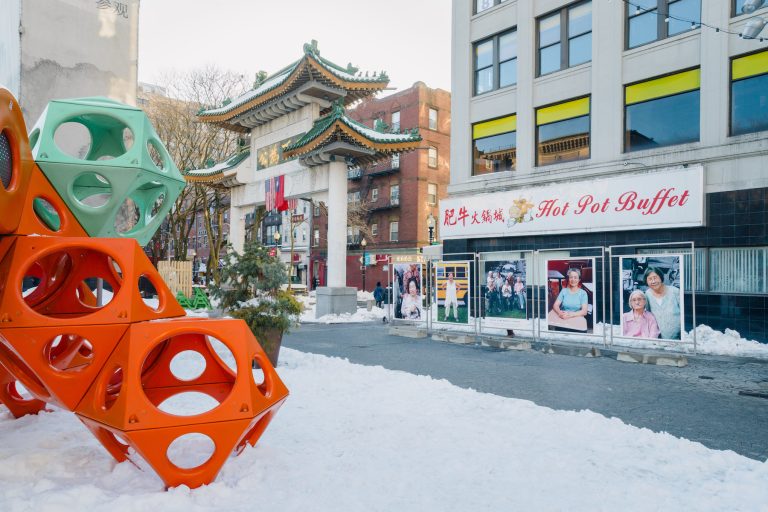
Boston Busing in Chinatown, 1975 juxtaposes photographs from the July 2025 reunion with rare archival images from 1975, celebrating the resilience of this community while inviting broader reconsideration of busing’s legacies across Boston.
Materials
aluminum prints mounted on komacel
Location:
About the Artist
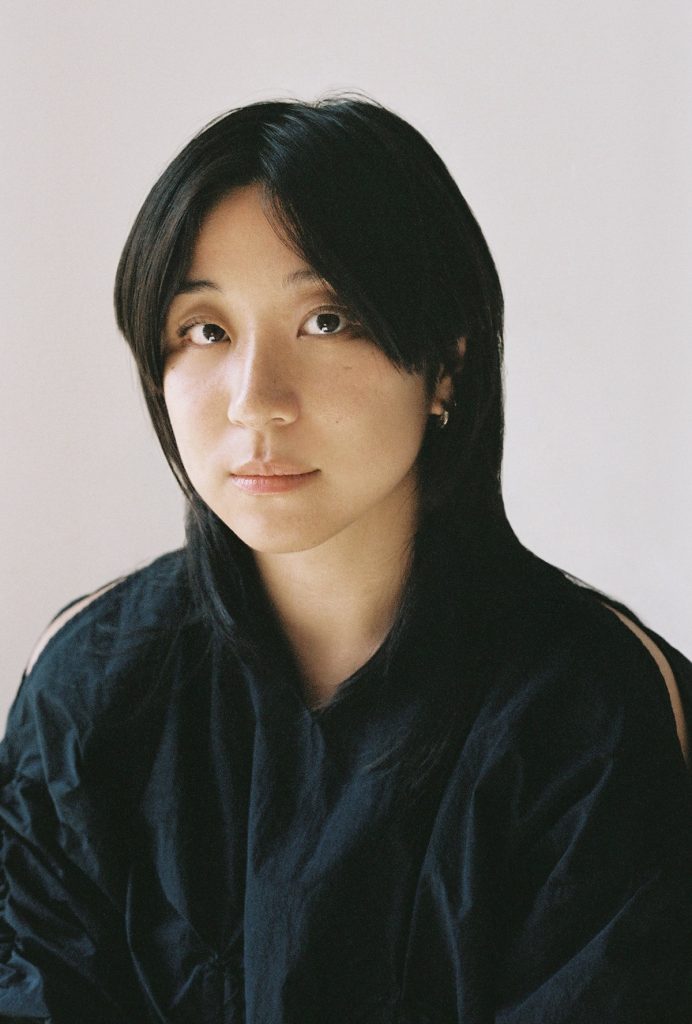
Daphne Xu is an artist and filmmaker who explores the politics and poetics of place. Her works unfurl from cities in flux, tracing the interior lives of women and diasporic subjects caught between displacement and belonging, erasure and myth. Xu works between 16mm and digital formats, using the camera as an instrument for embodied improvisation and encounter. Her films have premiered at festivals and institutions including Toronto International Film Festival, Museum of Modern Art, Visions du Réel, and Cinéma du Réel, where she won the Short Film Award in 2025. She is a MacDowell Fellow and Media City Chrysalis Fellow.
Artist Statement
Since 2018, I have been working alongside Boston’s Chinatown community—a robust network of organizers, residents, and artists deeply committed to preserving Chinatown as a home for working-class families amidst ongoing gentrification pressures.
Boston Busing in Chinatown, 1975 is part of a larger collaborative project, the Immigrant History Trail, developed in partnership with the Chinatown Community Land Trust. Through this work, we seek to amplify stories and anecdotes that have been overlooked or forgotten, creating an accessible, fragmented, and non-linear “trail” that reveals Chinatown in its full complexity—its struggles and triumphs, its poetry and beauty.
This exhibition honors the voices of those who fought for educational equity fifty years ago while creating space for intergenerational dialogue today. By juxtaposing past and present, I hope to build a living archive that celebrates resilience, centers community knowledge, and challenges singular narratives about this neighborhood’s history. – Daphne Xu
Additional Materials
Boston Busing in Chinatown: 50 Years Later was a panel discussion hosted in September 2025 reflecting on 50 years since Chinatown mothers organized around busing and education equity. The mothers (and daughters who were bussed) describe their experiences during that period of organizing.
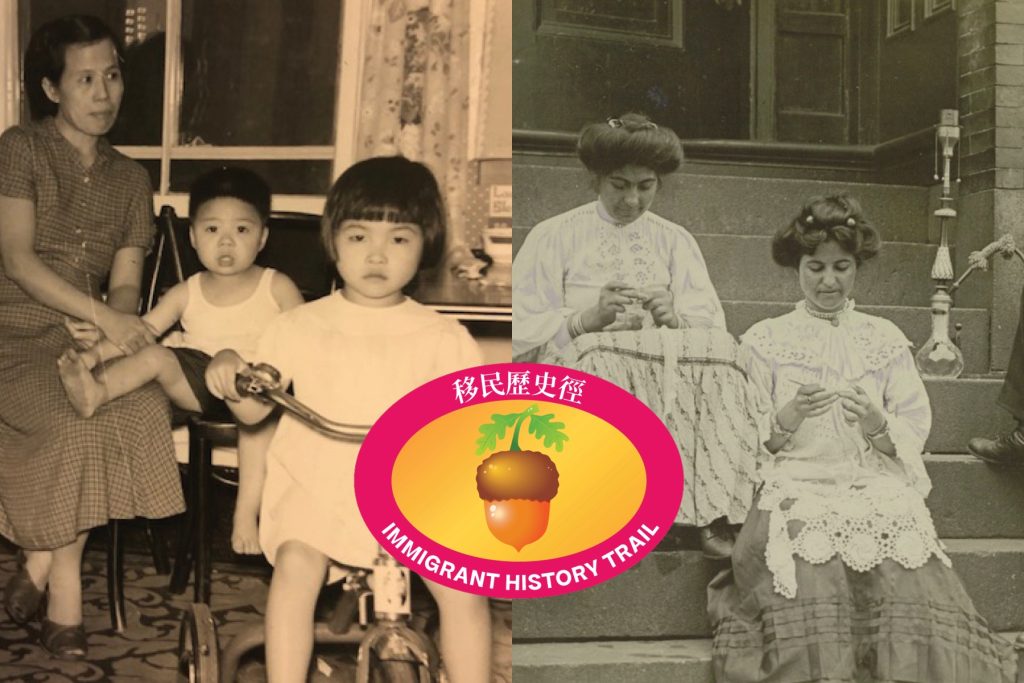
Learn more about the Immigrant History Trail project, and explore the different sites on the trail around Boston’s Chinatown!
A Special Thank You to Our Supporters
Project support for Boston Busing in Chinatown, 1975 is generously provided by the Mayor’s Office of Arts and Culture’s Un-monument initiative, supported by a grant from the Mellon Foundation. Thank you also to the Boston Arts Commission and the Boston Desegregation/Busing Initiative.
Thank you to all project contributors. These include teachers & activists Suzanne Lee, Cynthia Yee, Ann Moy, Michael Liu, and May Louie; mothers Sin Wah Lee, Suet Wah Lung, Anna Lee, Marie Yee, May Chan; students Howard Wong, Siu Tip Lam, Su Leung; Chinatown Community Land Trust members Suzanne Lee, Lydia Lowe, Vivian WuWong, Nora Li, Franny Wu, Ann Wong, event volunteers Elisha Zhao, Jonathan WuWong, Jenny Li, and supporting artist Wenhua Shi. In loving memory of Lai Mui Yu (1935-2025).
Public Art on The Greenway is made possible with major support from the Barr Foundation, Goulston & Storrs, and the Wagner Foundation, the Richard K. Lubin Family Foundation, the Mass Cultural Council, The New Commonwealth Fund, and Robert and Doris Gordon.
Additional support is provided by the Deborah Munroe Noonan Memorial Fund, Bank of America, N.A., Trustee.
About Chinatown Community Land Trust
The mission of the Chinatown Community Land Trust is to stabilize the future of Chinatown as a neighborhood for working class families and a regional hub for the Greater Boston Chinese community. We work for community control of the land, development without displacement, permanently affordable housing, and shared neighborhood spaces, consistent with the vision of the Chinatown Master Plan.
華埠社區土地信託會的宗旨是穩定華埠的未來,為工人階層家庭和大波士頓華人社會的中心地區。我們為了社區土地管控權,提倡無迫遷的發展建設 ,增加永久可負擔房屋和共享鄰里空間,與華埠整體計劃的願景相一致而工作。
About The Greenway and the Conservancy
The Greenway is a contemporary public park in the heart of Boston. We welcome millions of visitors annually to gather, play, unwind, and explore. The Greenway Conservancy is the non-profit responsible for the management and care of The Greenway. The majority of the public park’s annual budget is generously provided by private sources.
The Greenway Conservancy Public Art Program brings innovative and contemporary art to Boston through free exhibitions that engage people in meaningful experiences and dialogue with art, each other, and the most pressing issues of our time. Past Greenway exhibitions can be viewed on the Public Art Instagram (@greenwaypublicart) or The Greenway website (https://www.